Baha'is and civil society discuss freedom of religion or belief in Egypt alongside launch of “Erasure” report on Baha'i persecution



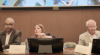



Alongside the latest United Nations Human Rights Council session, last week, the Bahá’í International Community (BIC), Amnesty International and the Egyptian Initiative for Personal Rights (EIPR) co-hosted a panel discussion on freedom of religion or belief in Egypt and marked a new EIPR report on the danger of the eradication of Egypt’s persecuted Bahá’í community.
The event drew a full room, including ten UN Member States, civil society organizations and other professionals, reflecting shared concerns over human rights in Egypt and offering participants a space to explore constructive steps to address the situation.
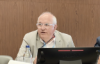
The panel featured Professor Nicolas Levrat, UN Special Rapporteur on Minority Issues; Mr Hossam Bahgat, Executive Director of EIPR; and Dr Saba Haddad, a BIC Representative to the United Nations. Pre-recorded interventions were presented by Professor Nazila Ghanea, UN Special Rapporteur on Freedom of Religion or Belief; and Mr Nikos Papandreou, Member of the European Parliament (MEP).
Mr Bahgat used his remarks to launch EIPR's new paper, Erasure: Egypt's Systemic Campaign to Eradicate its Bahá'í Community, drawing on case studies involving several Bahá’í families in Egypt and building on more than 20 years of work on freedom of religion or belief.
Bahá’ís in Egypt continue to face worsening difficulties in areas such as the registration of marriages, employment and burial arrangements, and “are at particular threat,” Mr Bahgat said, “because […] there is a systemic, bureaucratic, and legal structure that has been created to make it impossible to live as a Bahá'í” in Egypt. He also noted the use of broad terms such as “public order” in legal and administrative measures affecting freedom of religion or belief, adding that “a new Court of Cassation decision not only bans future recognition of Bahá'í marriages, but invalidates all previously recognized Bahá'í marriages, because recognition of a Bahá'í marriage is against public order under the Egyptian Constitution.”
In his remarks, Professor Levrat, the Special Rapporteur on Minority Issues, said that “in the Egyptian constitution, there is this recognition of complete, absolute freedom of religion and belief. But in practice, there is discrimination that appears in family law, status law, and in administrative law.” He drew attention to the UN’s 1992 Declaration on the Rights of Persons Belonging to National or Ethnic, Religious and Linguistic Minorities, and to the gap between what it states and how Egyptian authorities treat religious communities that are not recognized by the state.
A recorded intervention followed from the Special Rapporteur on Freedom of Religion or Belief, Professor Ghanea, who said that Egypt suffered from “chronic” human rights violations and encouraged the international community to address freedom of religion or belief in Egypt through direct and systematic action.
“The burden of violations, surveillance, and violence against so many in Egypt, on grounds of their thought, conscience, and religion is unfathomable, unnecessary, and an affront to the Egyptian nation. With determination, it could be reversed from today,” Professor Ghanea said.
Speaking for the Bahá’í International Community, Dr. Haddad said that the Bahá'í community in Egypt and the BIC have on repeated occasions sought constructive and direct dialogue with Egyptian authorities, to no avail, noting that "most of these issues simply require a straightforward administrative solution, and do not require legislative or constitutional amendments."
The persecution of Bahá’ís in Egypt stands in tension with President El-Sisi's own vision of Egypt, Dr. Haddad added, while commending the president for aspiring to a society “founded on coexistence and equal citizenship, affirming that the state should serve believers and non-believers alike, regardless of their religious beliefs.”
A pre-recorded intervention by Mr Papandreou, the MEP, was also presented during the panel, who described his recent visit to Egypt’s only Bahá’í cemetery. The cemetery is overcrowded and full, he said, and the Egyptian authorities need to provide additional burial land and protect other civil rights for Bahá’ís in Egypt.
Egypt can take several immediate and positive steps, Mr Papandreou added, such as "recogniz[ing] and document[ing] Bahá'í marriages, provid[ing] adequate burial grounds, end[ing] discriminatory administrative practices and security harassment, and allow[ing] Bahá'ís to practice their religion peacefully."
Intervention and statement of support from the international community expressed concern about the situation of the Bahá'ís. Canada reaffirmed Canada's commitment to freedom of religion or belief for all and expressed concern about the "discrimination, intolerance and restrictions" targeting the Bahá'í community. Canada asked the panel which practical measures have proved most effective in protecting Bahá'ís and other religious minorities worldwide. Switzerland expressed deep concern about the human rights impact of restrictions on Bahá'í burial grounds in Egypt and asked about possible avenues for a solution. The European Union (EU) recognized the role of civil society and UN experts in drawing attention to the situation of the Bahá'ís in Egypt and noted that the EU High Representative and the EU Special Representative for Human Rights have raised the issue with the Egyptian authorities and will continue to do so.