State theft against the Bahá’ís: from personal cash and wedding rings to children’s toys
Persian translation


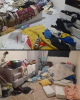
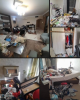
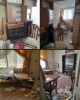
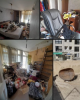
Climbing over the walls of family homes, arresting parents as their two-year-old watched on, taking away musical instruments, tearing through flowerpots and bags of rice, with no warrant, charge, or reason, Iranian government agents stormed Bahá’í homes and stole their personal belongings across seven provinces. In some cases, 14 agents, 5 cars and a representative of the Prosecutor’s Office arrived to raid one woman’s home to arrest her. The reason given to each of them was brutally clear: you are a Bahá’í.
Between 22 and 25 August, in the span of less than a week, Iranian authorities across the country turned Bahá’í homes and workplaces into scenes of arrests and confiscation, seizing cars, personal jewelry, cash, computers, professional equipment, musical instruments, household goods and even children’s toys. In one case, they packed a family’s belongings into the family’s own suitcases and carried them away.
11 individuals were arrested as families watched agents carry off their possessions. In one of many raids, agents took a family’s car along with household valuables and workplace tools; in another, they seized musical instruments and machinery before sealing the family’s business. The confiscations and arrests took place without any warrants. These are not simply searches. They are operations in which the state illegally strips away assets, livelihoods and economic security.
“This is state theft in daylight, stealing individuals’ personal possessions in the name of the government," said Simin Fahandej, the Representative of the Bahá’í International Community to the United Nations in Geneva. “Just because it is a government that enters your home and confiscates your jewelry, wedding rings, and other personal possessions, or takes away your car, does not make it legal. The Iranian government has been stealing possessions from Bahá’ís in the name of the state, but for its own use for almost five decades. Escalating this theft now in an already difficult economic climate is nothing but an attempt at the economic ruin of Bahá’ís. The stealing must stop now.”
In addition to the looting, raiding and stealing of personal possessions, 11 people were arrested or imprisoned, including those who were summoned to serve their existing sentences. This latest wave of arrests, raids and confiscations is part of an intensifying campaign of persecution against the Bahá’ís that has doubled over the past year, sweeping thousands of Bahá’í families across Iran into its path.
In the recent incidents, in Isfahan, more than 20 plainclothes agents simultaneously descended on the homes of three members of the Tebyanifard family, searching the homes and using physical and violent threats in front of a two-year-old child.
Armed agents connected the family’s phones to computers at the scene and transferred data, before confiscating laptops, cash, jewelry, a professional camera and a collection of handmade musical instruments, including a piano, violin, setar, cello, kamancheh, guitar and clarinet. The family’s music store was then sealed.
The case is emblematic of the absurdity of the persecution: musical instruments seized without a warrant or any semblance of legality, and an ordinary family’s livelihood effectively torn apart and criminalized because the individuals are Bahá’ís.
“The use of state power to dispossess Bahá’í families is especially egregious as the same authorities that seize the property also control the courts, security agencies and mechanisms that decide about the return of that property, while Bahá’ís, already denied basic civil and social rights, have little meaningful recourse,” said Ms. Fahandej. “Personal and family savings, vehicles, household possessions, professional equipment, musical instruments and even children’s toys have been taken. The very power of the state that should protect citizens and their property is instead being used to dispossess them.”
The economic consequences are devastating. Bahá’ís are already barred from university education and shut out of public-sector employment, measures designed to utterly destroy the community economically. The state is also stripping away, dismantling and destroying the modest livelihoods Bahá’í families have spent decades building. Years of work can be wiped out in a single raid. The damage then spreads through entire families, spouses, children, elderly parents and other dependents—leaving households financially exposed, economically crippled and with little means to rebuild what the state has taken from them.
The seizures are the latest expression of a decades-long policy of economic persecution. Since 1979, Iranian authorities have systematically confiscated Bahá’í-owned homes, farmland, businesses and other property, using courts and state agencies to dispossess a religious community the state refuses to recognize.
In recent years, authorities have increasingly invoked Article 49 of Iran’s Constitution—a provision intended to allow the state to recover wealth under vague pretexts—to confiscate the entirely legitimate homes, land, businesses, vehicles and bank accounts of Bahá’ís. No shred of evidence or legal basis has ever been provided for these confiscations, raids and arrests. Properties seized through Article 49 proceedings can be transferred through the Execution of Imam Khomeini’s Order (EIKO, or Setad), an entity under the direct authority of Iran’s Supreme Leader. Thousands of Bahá’í properties have been confiscated or expropriated over the past four decades. Bahá’ís have repeatedly sought legal redress without results, leaving families to seek the return of their property from the same state institutions responsible for its confiscation.
“The International Community calls on the Iranian government to end its misuse of state authority to seize Bahá’ís’ possessions, properties and livelihoods. These shameful practices, carried out for decades, must end. The government must instead fulfill its most sacred duty: to protect its citizens, uphold their rights and safeguard their homes and property,” said Ms. Fahandej.
For more information, please contact
-
Simin Fahandej, Representative to the United Nations, Geneva, [email protected], +41 22 798 5400 (English & Persian)
-
Rachel Bayani, Principal Representative to the United Nations, New York, [email protected], +12128032519 (English, French, German)
Background information
-
Kayhan Atefi and his wife, Fereshteh Rahmani, a Bahá’í couple in Isfahan, had their home and Mr. Atefi’s workplace raided for the second time in several months on 24 August. Agents searched the property for more than six hours before confiscating a television, jewelry, tools, the family’s car and even their grandchild’s toys.
When Mrs. Rahmani objected to the confiscation of the belongings, the agents said: 'These are illicit possessions,' and added, 'You didn’t learn your lesson the first time. You didn’t change your religion!'"
-
Amin Tebyanifard, his mother Bahariyyeh Askarinasab and his son Nima Tebyanifard—three generations of one Bahá’í family in Isfahan—had their homes searched simultaneously on 24 August by more than 20 agents. Machinery and handmade musical instruments were seized from the family’s musical-instrument workshop, and the family’s store was sealed shut. Nima Tebyanifard’s two-year-old child was present during the search. Family members were subsequently summoned to appear before intelligence or judicial authorities.
-
Fakhereh Zahedi, a Bahá’í homemaker in Sari, and Shima Sanaie, a Bahá’í seller of hygiene products, were both arrested on 22 August by Ministry of Intelligence agents and taken to the Sari Intelligence Department’s “Keshoui” detention center. Approximately 14 agents and a prosecutor’s representative were present during the arrests, and the warrants presented authorized only searches, not arrests. The charges against both women remain unknown.
-
Twelve Bahá’ís from Sari were sentenced on 20 August to a combined 26 years and 165 days of imprisonment and 76 years of deprivation of social rights on a charge of “carrying out educational and propagational activities” connected to the Bahá’í Faith. The case had moved between three courts since 2024.
-
Arsalan Yazdani, a Bahá’í graphic designer in Karaj, was arrested at his home on 22 August in front of his two children to enforce a three-year prison sentence after agents seized his and his wife’s devices without presenting a judicial warrant. The sentence stems from a 2021 conviction on charges of “membership in the perverse Bahá’í sect” and “propaganda against the regime”.
-
In Sari and the wider Mazandaran province, at least five Bahá’í women were arrested or interrogated within days of one another between 22 and 23 August. Agents entered Ms. Soraya Manouchehrzadeh’s home without a warrant, and at least two other women were arrested on warrants that authorized only a search. Ms. Negar Badiee, an English teacher, and Ms. Maral Rowshani, who sells hygiene products, were both interrogated about whether they had used their professions to “propagate” the Bahá’í Faith.
-
Sarir Moghen and her parents Jila and Vahid Moghen, Bahá’ís in Isfahan, were targeted on 25 August when security agents searched. Moghen family’s home and arrested the daughter, Sarir, who had recently returned to Iran from abroad. No information has been provided about the reason for the search or the grounds for Sarir’s arrest.
-
Iman Rashidi, a Bahá’í in Yazd, was taken into custody on 23 August after reporting to the Enforcement of Judgments Office to begin serving a sentence of three years, six months and one day in prison. He had also been sentenced to 15 years of deprivation of social rights and a fine of 371 million rials. His case dates to 2023, when intelligence agents searched his home, confiscated property and arrested him.