Gender Inequality: What Men Lose
By Daniel Perell
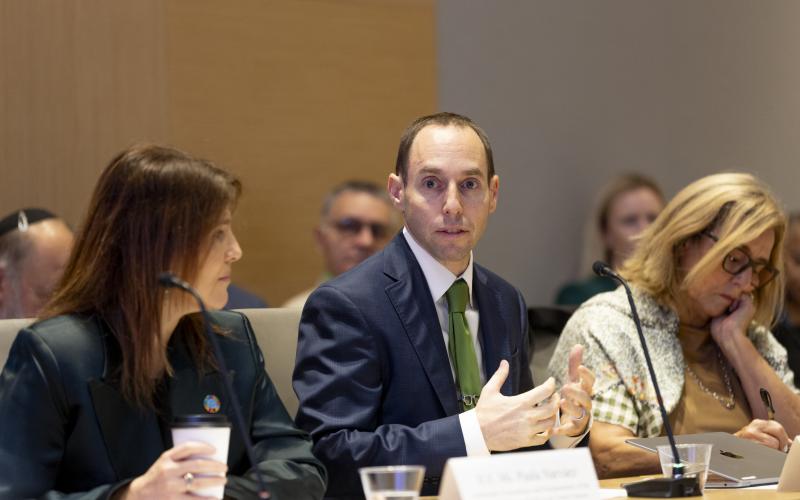
When something sad—or happy—happens in my house, I am the one who is most likely to cry. My wife and daughters look at me in these moments and we share a knowing smile. I am grateful that my parents equipped me with the self-assurance to cry in public and the capacity to laugh about it with my family. It has helped shape my understanding of a different kind of masculinity.
The discourse around gender equality focuses on the myriad forms of discrimination women face, and the various ways this hamstrings humanity’s progress. As it should. But I also often find myself considering what humanity is losing when men inherit harmful understandings of masculinity.
I recall a tragic story shared at an event I attended at last year’s Commission on the Status of Women about a woman who filed a restraining order against her husband. Before the order was issued, however, the husband took their daughter for a hike, during which he took both their lives.
The room was silent with shock and sadness, vibrating with fury at the father. Yet only a few of the responses noted the tragedy represented by the perversion of the father himself—that a human being might become so degraded as to commit such a heinous act.
What path led a man, who was once a child like any other, to such a bankrupt and despicable end? What forces and circumstances in society allowed him to think that such an act was his best or only option?
Women bear the overwhelming share of gender inequality’s abuses, affronts, and injuries. They suffer predominantly at the hands of men, whether silently or violently. Addressing these problems requires an assessment of the circumstances surrounding aggressors as much as victims. The kind of change we expect and need can only come about as we allow ourselves to openly discuss the harms men experience at the hands of gender inequality.
Many of the changes necessary to build a gender-equal world will need to be made by men. It is men who will need to stop turning to violence as an option to solve problems. It is, largely, men whose behavior will need to change to make way for true equality. At the United Nations, it is predominantly men who will need to vote for a female Secretary-General. How we expect men to make these changes is a vital question that we need to discuss—all the more so because it is so sensitive.
At the heart of the matter is a simple question: what is the equality we are working towards? It cannot be a world where women are encouraged to strive to be more like the most aggressive or dominating of their male counterparts, where the answer to patriarchy is everyone taking on characteristics of patriarchal norms. There is a shift necessary in the vision we have of humanity’s future.
What kinds of fathers might men become, if they were permitted to express their full range of human emotion, without being called names suggesting they are weak for doing so? What leadership qualities might they express? How much closer might we be to a world without war?
By characterizing gender equality as a “women’s issue,” burden is placed upon women and space for men’s contributions is narrowed. Those men who engage in the discussion are often lauded or chastised, thanked or accused—but only infrequently are they treated like any other participant in the dialogue. In a sense, men are tokenized in this space just as women are in others. And that cannot be the way to solve a problem in any space.
As we engage at the Commission on the Status of Women this year, I hope that while we consider the various ways women and girls suffer from gender inequality, we can also find ways for men to understand the benefits they would realize in a more equal world. Advancing the human family is an effort that requires all of us—regardless of outward characteristics. We suffer together. Or we can rise together.