Perspective | The Joint Responsibility of Expanding Human Fraternity
By Bani Dugal
This perspective piece is adapted from remarks delivered at the Global Conference of Human Fraternity, convened by the Muslim Council of Elders in Abu Dhabi on 3-4 February, 2019. Read our story on the global conference here
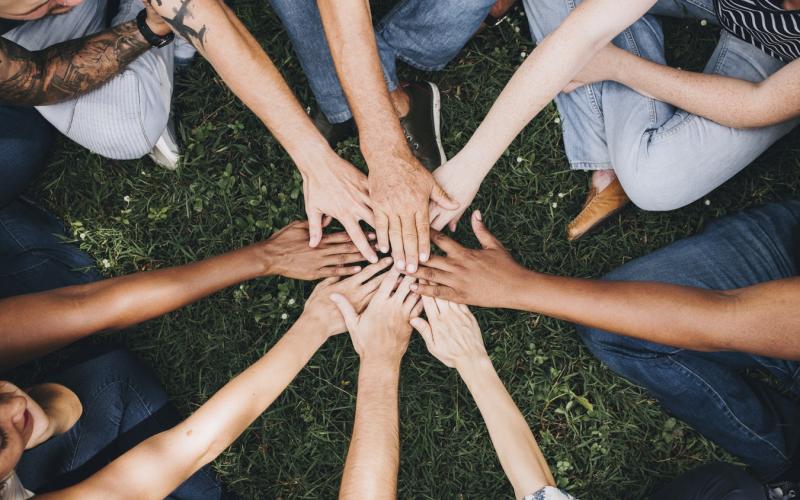
As societies around the globe strain and fray along lines of ethnicity, class, and similar characteristics, strengthening bonds of reciprocity, solidarity, and genuine affection among diverse populations emerges as one of the most pressing issues before us.
Expanding the bounds of human fraternity is a responsibility shared equally by all. A better world does not come about simply because we want it, nor even because we call and advocate for it. New and more mature patterns of relationships emerge only to the degree to which we take steps to build them.
A great moral responsibility therefore falls on each of us. Every individual must evaluate what his or her own response should be to the pressing needs of the current moment. No one can do this for us.
Yet, our duty to contribute towards the advancement of civilization are also our joint responsibilities. Discharging them is therefore a task to be shouldered not just by individuals, but by communities, societies, and ultimately, the entire human race, in its diversity and richness.
Building new patterns of collective life that more fully reflect the highest aspects of human nature—such as generosity, compassion, honesty, and nobility—is a task that calls for the contributions of all segments of the human family.
A world of true justice and prosperity will never be built by one group alone, according to its particular preferences and perspectives. Rather, every nation, group, and individual will, to a greater or lesser degree, contribute to the emergence of a world civilization towards which humanity is irrepressibly moving.
Over a century ago, Baha’u’llah—the founder of the Baha’i Faith—declared to the peoples of the world, “Ye are the fruits of one tree and the leaves of one branch.” In an age characterized by intense political division and rivalry, He explained that “the earth is but one country and mankind its citizens.”
For Baha’is, these are spiritual realities. But they are also social imperatives that must be translated into action. If consciousness of the oneness of humankind is indeed a prerequisite for human progress, then every form of prejudice and discrimination must be abolished, whether on the basis of gender, race, or any other characteristic. Age-old divisions must be healed and long-standing injustices rectified. Unity of purpose and a vibrant sense of shared endeavor must be fostered among ever larger groups of people.
Human fraternity, in all its forms, is inseparable from these objectives. In neighborhoods, towns, and villages around the world, Baha’is and their like-minded partners are working to foster unity, harmonize seemingly divergent views, and deepen appreciation for the fundamental oneness of humankind.
This is work that we believe is vital to every person of conscience and good will. This is the starting point necessary to address the ills we see today, the joint responsibility that lies before all of us.
Let each of us then exert the effort to contribute our share towards a world that must increasingly draw on the power of a united human family for the advancement of progress, prosperity, and universal human well-being.
--
Bani Dugal is the Principal Representative of the Baha’i International Community to the United Nations
--
Follow the Baha’i International Community on Twitter. Facebook and Instagram