To Revitalize CSW, Revitalize the Culture of Civil Society
By Liliane Nkunzimana
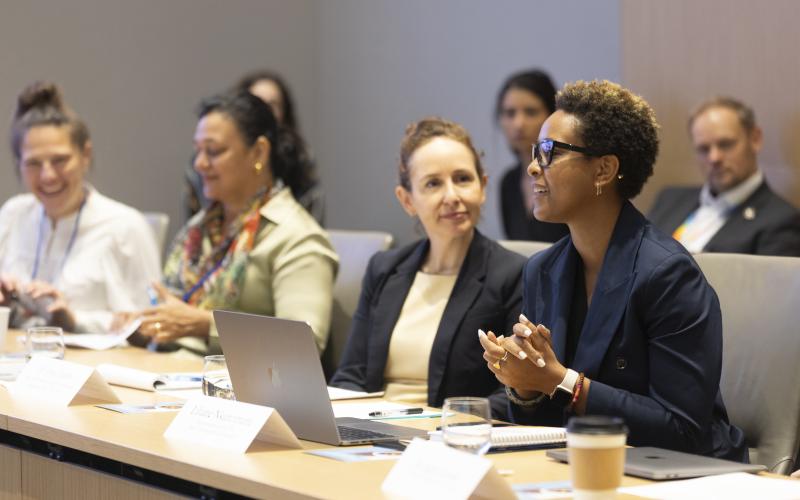
The flurry of activity unfolding over the course of the thirtieth anniversary year of the Fourth World Conference on Women, also known as Beijing+30, offers us a much-needed moment for introspection. Such stock-taking would, of course, start with the policy and social advances and setbacks affecting women around the world. But it should also touch on refinements within civil society itself, especially as they relate to advocacy and approaches to social transformation that, if adopted, could assist the women’s rights movement to better advance its vital work at the United Nations and beyond.
There are many achievements for feminist advocates to celebrate with pride. The framing of the Beijing Declaration and Platform for Action itself, the adoption of Security Council Resolution 1325 on women, peace and security, and the 2015 creation of UN Women are all remarkable accomplishments. We have seen more women elected to leadership positions, and norms themselves have risen at the international level, resulting in legal reforms at national levels.
And yet numerous and varied rollbacks have eroded these hard-won gains. Retrogressive and discriminatory norms are resurging, harming women and men alike. For years now, we have seen the tenuous nature of institutional reforms, and how vulnerable they are when priorities or power shift. And we see the need for progress that can withstand the see-saw of changing governments and shifting ideologies.
One aspect of a more promising path forward is the proposed revitalization of CSW. Though negotiations toward this end will include many technical elements, higher-level organizing principles and values are vitally important as well, and we must give them due consideration.
Fundamental social transformation can falter if changes in sentiment and personal opinion are not accompanied by changes to institutional structures. But the opposite is also true. Formal accession to a treaty or agreement to a process, without deeper ownership of its principles and commitment to their realization, can ring similarly hollow.
Revitalization, therefore, must proceed on multiple levels simultaneously—formal and informal, structural and relational, institutional and personal. This brings us to the women’s movement at the UN and the value to be found in refining and strengthening its own internal culture—of revitalizing its own approach.
There are tendencies and practices that sometimes characterize the culture of feminist activism that seem to contradict the foundations of feminism itself. The policing role that power-holders can adopt in feminist spaces, for example, fosters a level of antagonism and aggression that wards off potential allies. Rigid and rigidly-enforced norms can silence those without the expert vocabulary that seems to be the only acceptable bona fides for entry into the feminist space.
The needs of the next generation of young feminists—facing a world that so often seems to be disintegrating before their very eyes, with many of the gains of their forebears rolled back or in total collapse—call for new approaches. We need to foster a feminism characterized by humility, in the face of diverse experiences and sources of knowledge; a feminism where the means of change are coherent with the ends we seek; a feminism that strengthens analytical capacity, fosters consultative approaches, and cultivates mutual respect, trust, justice and common cause for the well being of all.
As we gather at CSW next month, and as we consider the revitalization of CSW, let us revitalize our own attitudes, habits, and practices, to ensure we all have what we need to persevere in this vital work.
Liliane Nkunzimana is a Representative of the Bahá’í International Community to the United Nations