Why participation will be so important in advancing the post-2015 agenda. Or: Zeroing in on the Zero Draft
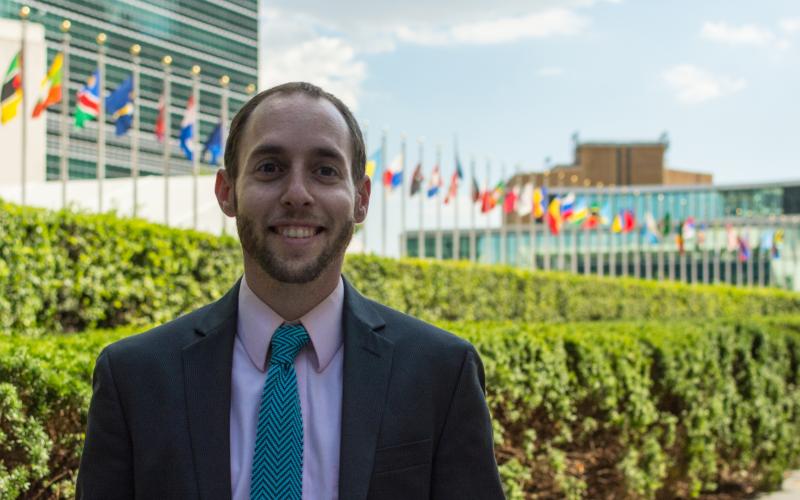
The draft outcome document, known as the Zero Draft, which governments are currently preparing for adoption in September, reflects much hard work by governments – and considerable input already by civil society groups from around the world.
It is well on its way to becoming the kind of inspiring, transformative document that the world needs to move ahead after 2015, to help create the kind of peaceful, safe, just and inclusive societies that we all want.
There is no doubt, however, that the document, which will form the basis for global development efforts for the next decade and a half, can still be improved.
For one, it can be even more visionary, less tentative and more consistent with the proposed sustainable development goals, which are ground-breaking in their scope and ambition at creating a new and sustainable global society.
More specifically, there are two intertwined elements lacking in the current draft. The first has to do with communication of the agenda. The second is the idea that people should not be passive recipients in the development process – rather they must be active participants.
The manner in which the UN itself was founded sheds light on how these things are related.
Immediately preceding the creation of the United Nations, the peoples of the world, and Americans in particular, didn’t automatically support the idea of joining an international organization – especially considering the failure of the League of Nations just before.
In order to build public support for United Nations, the U.S. State Department took unprecedented efforts to educate the public and their leaders in Congress about the merits of US involvement in the UN.
Over the course of several years, over 3.5 million pieces of literature were distributed including millions of educational publications through over 400 citizen groups – far fewer than there are today.
The campaign unleashed a string of public meetings, speeches, radio broadcasts, and even enlisted the help of the Hollywood, broadcasts documentaries and newsreels and created the first Public Liaison Division responsible for reaching out to “all sections of the nation to discuss with the people everywhere the meaning and limitations of the proposed UN organization and our expectations concerning it.”
By the time San Francisco opened, State Department samples of public opinion showed that 60% of the surveyed public had heard or read about the proposals for international organization.
More significantly, 81% of the polled population had answered “yes” to the question: “Do you think the United States should join a world organization with police power to maintain world peace?” Of the “yes” responses, a shocking 83% thought it was “very important” for the U.S. to join.”
What lessons might this have for those negotiating the post-2015 agenda today?
The Secretary General’s Synthesis Report states that “success of the Post-2015 agenda will equally depend on the power of the new agenda to inspire and mobilize essential actors, new partnerships, key constituencies and the broader global citizenry.” The Zero Draft calls the development agenda as one “by and for the people,” one that sets us on a common journey which will involve all sectors of society, and “ordinary citizens.”
The shared framework of the SDGs, conceived in the inter-governmental forum, must be translatable to people’s lives, to grassroots endeavors, to the work of regional institutions and national bodies.
National ownership is very important—this is the most important vehicle to move the agenda forward. Political leaders must be aware of the SDGs and must know how to communicate them.
MDGs are recognized as the most successful anti-poverty campaign in history. Yet, in parts of the world populations still don’t know what MDGs are or have experienced them as a failure. The P-2015 agenda is broader and more ambitious than the MDGs
Ultimately, the success of the SDGs will hinge in large part on identifying effective means of implementation.
The structural and technical aspects of MOI receive significant attention, and rightly so.
But it is people who enforce regulations or ignore them, who translate plans into action or hesitate on the sidelines, who uphold positions of authority or abuse them.
It is important that as we talk about an agenda “by and for the people” that we consider the role that the capacity of individuals will play in translating the vision of the Post-2015 development agenda into reality.
It is important therefore to address the human resources needed to achieve transformative global progress as robustly as the financial and technological resources needed.
This is not only a responsibility but we should consider that it is a desire of the majority of the people of the world to be of service, to contribute to the betterment of their lives, the lives of their families, their communities, their nation and the world.
In light of this, two very practical steps we might suggest in the zero current draft. The first is to acknowledge communication as a key enabler of implementation inasmuch as it is the only way to effectively reach the very people who need to be involved in this process. The second is to ensure that ‘ordinary citizens’ – mentioned at the end of the declaration – are moved to the beginning, because they are where this process will begin.
-- By Daniel Perell, Representative of the Baha’i International Community to the United Nations
[This perspective is adapted from remarks made by Daniel Perell of the Baha’i International Community’s United Nations Office on 17 June 2015 at a briefing by civil society organizations in response to the so-called “Zero Draft” outcome document that governments are preparing for adoption in September at the United Nations as part of the post-2015 development agenda.]