Development

La création d'une communauté unifiée

La création d'une communauté unifiée

Déclaration de la Communauté internationale baha'ie

1 January 1976

Un établissement humain doit, tout d'abord, répondre à la question: "Quel est le but de notre vie, en tant qu'être humains, sur cette planète?". Faute de réponse à cette question, nous ne pouvons pas être certains des mesures à prendre afin de façonner notre comportement, en tant qu'individus, et édifier une société dans laquelle nous pouvons avoir une action réciproque, dans le but de parvenir à un bonheur humain élémentaire. La façon dont nous définissons la nature de l'individu et les ressources potentielles qu'il doit mettre en œuvre, pour être heureux, déterminera l'environnement spirituel et physique nécessaire à tout être humain, pour parvenir à son plein développement.

La nature de l'individu se rattache évidemment à celle de la société et de la civilisation. Tout en nous posant la question concernant le but de l'individu, nous ne pouvons manquer de faire de même quant au dessein fondamental de la famille et, au-delà de celle-ci, de la communauté locale, nationale et mondiale.

La perception largement répandue de l'impuissance actuelle des établissements humains, ruraux ou urbains, qu'il s'agisse de pays pauvres ou riches, à satisfaire aux besoins humains et à assurer le bonheur aux membres de la race humaine, témoigne d'un éveil de la conscience humaine conduisant éventuellement au développement de nouvelles façons de vivre, de même qu'à de nouvelles conceptions d'un environnement favorable à la croissance. Le point central de cette approche est la reconnaissance de la nature spirituelle de l'homme. Il ne s'agit pas seulement de protéger et nourrir le corps physique. Les qualités rationnelles et spirituelles, qui sont à la source et la base de la croissance de l'homme, doivent également être nourries. L'établissement est l'environnement physique dans lequel se développent ces trois aspects de la nature humaine: physique, rationnel et spirituel.

La communauté devrait refléter le but fondamental de la vie humaine, dont l'essence même est de connaître et adorer Dieu, tout en contribuant au progrès d'une civilisation allant constamment de l'avant. La prière, la méditation et le travail accompli dans un esprit de service envers l'humanité sont tous, nous le maintenons, des expressions de l'adoration d'une Source Suprême, dont l'essence et la nature sont au-delà de la compréhension humaine, mais dont le plan et la direction se manifestent dans la vie et les enseignements des fondateurs des religions révélées du monde. Ces fois sont perçues comme étant des phases du déroulement d'un plan divin et les communautés humaines comme l'expression physique d'une unité établie par la religion, à chaque âge. C'est ainsi que nous voyons des communautés reflétant l'unité de la famille, de la tribu et de la nation Dans cette perspective, le bonheur humain, en notre temps, exige que tout le monde reconnaisse l'unicité du genre humain et s'efforce d'amener l'humanité à l'unité, loi spirituelle et besoin suprême de notre âge. Grâce à des relations étroites avec leur Créateur et leurs semblables, hommes et femmes, enfants et adolescents, que ce soit dans une grande ville, une cité ou un village, peuvent se trouver soudés par un lien spirituel qui non seulement les rassemble au sein de leur environnement immédiat, mais encore, dépassant les limites locales et englobe tous les peuples de la planète. C'est seulement dans ce cadre qu'un établissement peut remplir les besoins de ses habitants.

Afin d'éveiller en chaque individu un désir sincère de rechercher le véritable bonheur et de s'acquitter de ses hautes responsabilités tant envers lui même qu'envers tous les autres membres de la famille humaine, la vie dans la communauté devrait encourager l'accomplissement de certaines conditions essentielles. Pour n'en citer que quelques unes:

  1. Développement d'un bon caractère et de qualités spirituelles, telles que l'honnêteté, la loyauté, la compassion et la justice.
  2. Éducation graduelle de tout le monde en vue de l'élimination des préjugés de race, croyance, classe, nationalité et sexe.
  3. Élimination de toutes les formes de superstitions nuisibles au progrès humain, en comprenant l'harmonie de la science et de la religion, représentant deux aspects de la réalité.
  4. Développement des talents et capacités uniques de chaque individu, en cultivant les connaissances et en acquérant des techniques pour la pratique d'un métier ou d'une profession, non seulement pour une satisfaction personnelle, mais encore pour contribuer à l'enrichissement de la vie de la communauté entière.
  5. Entière participation des deux sexes aux opérations électorales et administratives de la communauté, y compris les prises de décisions.

Dans un tel environnement, les individus et la communauté réagiront réciproquement, de façon continue, dans un souci mutuel d'assurer le bonheur de tous les êtres humains. Par exemple, la famille - unité fondamentale de la société et souvent le lien le plus puissant entre l'individu et la communauté - est non seulement responsable du bien-être physique de ses membres, mais encore de leur développement spirituel. Le mariage devrait se faire d'après le libre choix des partenaires, avec le consentement des parents et sous le contrôle du corps dirigeant de la communauté, basé sur un engagement concernant la véritable égalité de l'homme et de la femme, l'éducation des enfants dans une atmosphère d'amour et d'universalité, ainsi que la reconnaissance des droits et responsabilités de chaque membre de la famille.

Un plan d'administration, à l'échelle locale, nationale et internationale, devrait comprendre des dispositions pour que l'énergie engendrée par la foi des individus soit canalisée dans des institutions qui utilisent cette force collective, de façon systématique, afin de créer un nouveau niveau de conduite sociale. Le corps administratif local, à titre d'illustration, devrait être élu par tous les membres de la communauté au scrutin secret, sans candidatures ni campagne électorale. Libre d'intérêts acquis, ce corps sera chargé du bien-être de sa communauté. Cependant, il sera toujours guidé, dans ses décisions et actions, par un souci de l'ensemble de l'humanité. Son but sera d'agir, selon ses possibilités, non seulement en vue d'éduquer, conseiller et s'occuper des membres de sa propre communauté, mais encore de le faire pour toutes autres personnes pouvant avoir besoin de son assistance et désireuses d'y avoir recours. Ce corps s'efforcera toujours d'encourager l'harmonie, le progrès et la justice. Il sera relié aux membres de la communauté en prenant conseil avec eux au sujet des besoins et buts, tant individuels que communautaires, à des réunions régulières où tous peuvent exprimer leurs idées.

La position centrale de la prière et de la méditation dans la vie individuelle et communautaire renforcera le rôle des lieux d'adoration, au sein des villages, cités et grandes villes, et les rattachera à une société globale. Ces lieux de prière devraient être ouverts à tout le monde, sans distinction d'origine ni de croyance, et devraient être agrandis et développés, afin de servir de sièges autour desquels tourneront les institutions scientifiques, éducatrices, humanitaires et administratives de chaque communauté. C'est ici que membres de la communauté viendront prier et méditer au début de chaque jour. Ainsi, les activités de la journée -- que ce soit chez soi, à l'école ou au travail, au bureau, à la ferme, à l'usine, (etc...)- découleront d'une source spirituelle et deviendront l'expression extérieure de la foi.

Bien que l'on puisse à peine s'imaginer, à présent, ce que seront la richesse ultime d'une humanité organiquement unie et le caractère de la vie individuelle et collective, au sein d'une communauté mondiale future, le plan d'après lequel un tel développement peut se produire et les mesures immédiates que les dirigeants responsables d'une humanité nécessiteuse devraient maintenant adopter peuvent être clairement discernés et devraient être poursuivis avec foi, courage et détermination.
Birleştirilmiş Bir Toplum Olusturmak

Birleştirilmiş Bir Toplum Olusturmak

[First published: 1976 as "Building a Unified Community"]

New York—1 January 1976

Insanin kendi içinde yaptigi bir hesaplasmada öncelikle su soruya yanit bulmasi gerekir: "Insanlar olarak, bu dünyadaki yasamimizin amaci nedir?" Bu yanit olmaksizin, bireyler olarak davranislarimizi sekillendirmek ve temel bir mutluluga ulasmak amaciyla karsilikli iletisim kurabildigimiz bir toplum olusturmak için benimsememiz gereken hareket tarzini açikça göremeyiz. Bir insanin mutlu olmak için sahip olmasi gereken kisiligi ve özellikleri nasil tanimladigimiz, her insanin tam bir gelisimi basarabilmesi için gereksinim duydugu ruhani ve fiziksel çevreyi belirleyecektir.

Dogal olarak, insanin kisiligi ile toplumun ve uygarligin özellikleri birbiriyle iliskilidir. Bireyin yasamdaki amacini sorgularken, ailenin ve bunun ötesinde, yerel, ulusal ve dünya toplumunun temel amacini da sorgulamaktan kaçinamayiz.

Bugün, kentsel veya kirsal alanlarda, yoksul veya zengin ülkelerde var olan yerlesim merkezlerinin insanin gereksinimlerini karsilamak ve insan irkinin üyelerine mutluluk saglamak konusunda basarisiz olduguna dair yaygin inanç, bizi, yeni yasam modellerinin gelistirilmesine ve gelismeye elverisli bir çevre konusunda yeni kavramlara götürecek olan bir insan bilincinin uyanmakta oldugunun bir kanitidir. Bu yaklasimin temelinde, insanin ruhani bir yapiya sahip oldugunun kabul edilmesi yatmaktadir. Korunmasi ve beslenmesi gereken, sadece fiziksel vücut degildir. Hem insanin gelisiminin kaynagi ve temeli ve hem de, diger insanlarla olgun ve gönüllü bir isbirligi kurmasinin araçlari olan rasyonel ve ruhani özelliklerinin de beslenmesi gereklidir. Yerlesim yeri, insanin dogasinin bu üç yönünün - fiziksel, rasyonel ve ruhani - gelistigi fiziksel çevredir.

Toplum, insan yasaminin, özü Tanri'yi tanimak ve O'na tapmak ve sürekli ilerleyen bir uygarligi daha da ileri götürmek olan temel amacini yansitmalidir. Dua, meditasyon ve insanliga hizmet ruhu içinde yapilan is, Zati ve Dogasi insanin kavrayisinin ötesinde olan, ama Plani ve Kilavuzlugu dünyadaki dinlerin Kurucularinin yasamlarinda ve ögretilerinde ortaya çikan Yüce bir Kaynaga yapilan ibadetin ifadeleridir. Bu inanç sistemleri ilahi bir planin yürütülmesindeki çesitli asamalar ve insan toplumlari da her çagda din tarafindan olusturulan bir birligin fiziksel ifadeleri olarak görülmektedir. Nitekim, aile, kabile ve ulus birligini yansitan toplumlar gördük. Bu açidan bakildiginda, zamanimizda insanin mutlulugu, tüm insanlarin insan irkinin özde bir oldugunu kabul etmelerini ve insanligi, çagimizin ruhani yasasi ve önde gelen bir gereksinimi olan birlige ulastirmak için çaba göstermelerini gerektirmektedir. Ister kentte, kasabada veya ister köyde yasasinlar, erkekler, kadinlar ve çocuklar, Yaraticilari ve diger insanlarla kurduklari yakin iliski sayesinde, kendilerini sadece yakin çevreleri içinde bir araya getirmekle kalmayan, fakat mekan sinirlarini asarak, dünya üzerindeki tüm insanlari kucaklayan ruhani bir bagla kaynasabilirler. Bir yerlesim yeri, sakinlerinin gereksinimlerini ancak böyle bir çerçeve içinde karsilayabilir.

Her insanin içinde gerçek mutlulugu arama ve kendisine ve insanlik ailesine karsi olan yüce sorumluluklarini yerine getirme konusunda içten bir arzu uyandirmak için, toplum yasaminin belirli gerekliliklerin karsilanmasini tesvik etmesi gerekmektedir. Bunlardan bazilari sunlardir:

Iyi bir karakterin ve dürüstlük, güvenilirlik, sefkat ve adalet gibi ruhani özelliklerin gelistirilmesinin tesvik edilmesi.
Tüm insanlarin irk, inanç, sinif, milliyet ve cinsiyet konusundaki bölücü önyargilardan uzaklasmasina dogru yavas yavas egitilmesi.
Insanin gelisimini engelleyen her türlü hurafenin, din ile bilimin gerçegin iki yönü olarak uyum içinde olduklarinin anlasilmasi yoluyla yok edilmesi.
Her bireyin sahip oldugu essiz hüner ve yeteneklerin, bir is veya bir meslek edinilmesi amaciyla kazanilan bilginin ve becerilerin sadece kisisel doyum için degil, tüm toplumun yasaminin zenginlestirilmesine bir katki olarak da görülmesi yoluyla gelistirilmesi.
Her iki cinsin de toplumun seçim, yönetim ve karar alma süreçlerine tam olarak katilmasi.
Böyle bir çevrede bireyler ve toplum, tüm insanlarin mutlulugu konusuna karsilikli önem vererek sürekli bir iletisim içinde olacaklardir. Örnegin, toplumun temel birimi olan ve genellikle de birey ile toplum arasindaki en güçlü bag olan aile, sadece üyelerinin fiziksel rahati konusunda degil, ruhani gelisimleri konusunda da bir sorumluluga sahiptir. Evlilik, eslerin özgür seçimi, ebeveynleri onayi ve toplumun yönetim organinin denetimi altinda gerçeklesmeli ve erkeklerle kadinlarin gerçek esitligi, çocuklarin bir sevgi ve evrensellik ortami içinde yetistirilmesi ve ailedeki her bireyin haklarinin ve sorumluluklarinin kabul edilmesi konularindaki kararliliga dayanmalidir.
Yerel, ulusal ve uluslararasi bir yönetim modeli, bireylerin inançlarindan dogan enerjiyi, bu yaratici gücü sistemli bir yolla yeni bir sosyal davranis düzeyi yaratmak amaciyla kullanacak olan kurumlara kanalize etmelidir. Örnek olarak, yerel yönetim kurumu toplumdaki tüm üyeler tarafindan gizli oyla ve aday gösterme ve propaganda olmaksizin seçilmelidir. Böylece çikar çevrelerinden kurtulmus olan böyle bir yönetim kurumuna, toplumunun refahini saglama sorumlulugu verilmis olacaktir. Ancak, kararlarina ve hareketlerine her zaman tüm insanliga karsi duydugu sorumluluk yön verecektir. Amaci, sadece toplumunun üyelerinin ötesinde, yardima ihtiyaci olan herkesi kaynaklari çerçevesinde egitmek, özen göstermek ve yardimci olmak için çalismak olacaktir. Her zaman uyumu, gelisimi ve adaleti gelistirmek için çalisacaktir. Toplumun tüm üyelerinin kendi fikirleriyle katkida bulunduklari düzenli toplantilar kanaliyla, hem bireysel ve hem de toplumsal ihtiyaçlar ve hedefler konusunda yapilan mesveretlerle toplumun üyelerine bagli olacaktir.

Duanin ve meditasyonun bireyin ve toplumun yasaminda sahip olacagi önemli konum, köylerin, kasabalarin ve sehirlerin kalbinde yer alacak olan ibadet yerlerinin rolünü destekleyecek ve bunlari küresel bir topluma baglayacaktir. Bu mabetler her türlü geçmise ve inanca sahip olan tüm insanlara açik olmali ve çevresinde her toplumun bilim, egitim, yardim ve yönetim kurumlarinin dönecegi bir merkez olarak hizmet vermek üzere büyütülmeli ve gelistirilmelidir. Toplumun üyeleri her günün basinda dua ve meditasyon için buraya geleceklerdir. Bu sekilde, evde, okulda veya iste olsun, ofiste, çiftlikte veya fabrikada olsun, tüm günlük etkinlikler ruhani bir kaynaktan akacak ve inancin disa vurulan bir ifadesi olacaktir.

Her ne kadar, organik olarak birlesmis bir insanligin sonuçta varacagi zenginlik ve gelecekteki bir dünya toplumu içindeki bireyin ve ortak yasamin özellikleri ancak silik bir sekilde hayal edilebilse de, böyle bir gelisimin içinde yer alacagi model ve yardima ihtiyaci olan bir insanligin sorumluluk sahibi liderlerinin simdi atmasi gereken adimlar açikça görülebilmekte ve inanç, cesaret ve kararlilikla izlenmelidir.

BAHAI ULUSLARARASI TOPLUMU

VE

BIRLESMIS MILLETLER

Bahai Uluslararasi Toplumu uluslararasi bir hükümet disi kurum olarak, Birlesmis Milletler Ekonomik ve Sosyal Konseyi (ECOSOC) ve Birlesmis Milletler Çocuklar Fonu (UNICEF)'nda danismanlik statüsüne sahiptir ve Birlesmis Milletler Çevre Programi (UNEP) ve Birlesmis Milletler Halkla Iliskiler Bölümü (DPI) ile isbirligi yapmaktadir. New York, Cenevre, Viyana ve Nairobi'de temsilcilikleri bulunmaktadir.

Bahai Uluslararasi Toplumu sosyal ve ekonomik kalkinma alanlarinda Birlesmis Milletler programlariyla olan isbirligi sirasinda, ECOSOC, onun islevsel komisyonlari, heyetleri ve ilgili kurumlariyla birlikte çalismistir. Bu etkinliklerde bilgiler saglamis, bildiriler sunmus ve su çesitli konularda brosürler yayinlamistir: insan haklari, sosyal kalkinma, kadinin statüsü, dünya besini, bilim ve teknoloji, nüfus, uyusturucu kullanimi, çevre, Birlesmis Milletler Üniversitesi, aile, gençlik, su, suçun önlenmesi, irk ayirimciliginin yok edilmesi, çöllesme ve insan yerlesimleri.

Bahai Uluslararasi Toplumu ayrica, Birlesmis Milletler yillarina, dünyamizin sosyo-ekonomik sorunlariyla ilgili olan önemli konferanslarina ve hazirlik ve izleme toplantilarina ve etkinliklerine de katilmistir.

The Environment and Human Values

The Environment and Human Values

Prepared originally for the United Nations Conference on the Human Environment, Stockholm

Stockholm—1 June 1972

"The earth is but one country and mankind its citizens." - Bahá'u'lláh

"If carried to excess, civilization will prove as prolific a source of evil as it had been of goodness when kept within the restraints of moderation." - Bahá'u'lláh


THE BASIC ILLNESS

The obvious causes of our current environmental symptoms should not conceal the nature of the basic illness. No single analysis of the problem of the human environment has exposed the root of the difficulties facing the world today: that the social structures of the world and the systems of values on which they were built cannot meet the new human needs.

Man has developed a new relationship to both his natural environment and his fellow. The radical transformation of his physical environment by science and technology during the last century has given him the power to control and modify natural forces. It has eliminated physical barriers to world unity, but it has created at the same time complex and divisive social relationships. We are consequently allowed the alternatives of either regressing to a primitive level of technology, or fulfilling the potential of a united world.

To achieve the latter - a world civilization - we must recreate our societies and their values.

Aware of the interdependence of the major elements of the world ecosystem - an interdependence evident also at the social, economic and political levels - we are beginning to see that integration of life on the planet requires unified action on a scale we have not yet achieved. Partial solutions seem only to prolong the difficulties; yet we hesitate to adopt a new and workable system of values for the world. For until there is unity at the most fundamental level - that of human values - social problems, simple or complex, will remain unresolved.

THE FOUNDATION OF HUMAN VALUES

Strangely, religion, which has traditionally been the area of human experience most centrally concerned with human values and the definition of man's purpose, is seldom considered in the search for solutions to current world problems such as those of the human environment. Yet religion (in the broadest sense) has not been static: new teachers, new movements have come many times in human history, providing new social and cultural directions for man. The major religions in particular have succeeded, at least for a time, in unifying many disparate elements into a common social force based on a common set of values.

Today our need is similar. A lack of understanding or agreement between men at the most basic level - their goals and purposes - undermines attempts at comprehensive and long-range solutions to specific world problems, whether environmental, political, economic, or social.

Man's predicament was foreseen over 100 years ago by Bahá'u'lláh, a Persian exile and prisoner and Prophet-Founder of the Bahá'í Faith. Through His writings, which Bahá'ís believe have divine authority and power, He gave mankind a plan for achieving the human understanding and world order necessary to reform and unify human society. Many of the principles established by Bahá'u'lláh have immediate application to the problems of the human environment. In fact, the great majority of current world difficulties can be traced to our failure to observe the spiritual and moral standards and to apply the social concepts set down by Bahá'u'lláh, some of which are outlined below.

BAHÁ'Í PRINCIPLES CONCERNING THE HUMAN ENVIRONMENT

An Ever-Advancing Civilization for all the peoples of the world with a reorientation to the quality of life that comes from an emphasis on spiritual values.

Harmony of Science and Religion, of material and spiritual values which deal with complementary aspects of man's needs.

Oneness of Mankind, involving the recognition that all men are brothers, and that prejudices of race, religion, class, sex and nation must be abolished.

Unity in Diversity, accepting the differences among men and societies as assets, and uniting individuality with social responsibility.

World Order, including a world government representing all nations and peoples, capable of maintaining world peace and providing leadership for a world society.

A World Economy, with resources developed for the good of all, and an emphasis on renewable resources.

Social Justice, establishing equal rights and privileges for all people and the commitment of each individual to the welfare of his fellow man.

Universal Education for world understanding, based on the rational and independent investigation of truth, and leading to a sense of joint responsibility for the family of man.

Moderation in all things, including the material development of civilization.

As the people of the world are taught these principles and apply them in their daily lives, the imbalances in the human environment will diminish. The pattern is very simple and world-embracing, yet adaptable to the local needs and conditions of each region and people.

Already the world-wide Bahá'í community, including every major race, class, creed, and culture, and established in over 50,000 centers around the globe, is working to bring about this basic transformation in human values and understanding. Indeed, Bahá'ís today demonstrate the practicability of this approach. As the teachings of Bahá'u'lláh change the lives of people from all parts of the globe, uniting those from less developed and more developed regions in service to the human race, Bahá'í communities are making a positive contribution in creating both a world unified in its diversity and an environment promising justice and fulfillment for the whole of mankind.


"In cycles gone by, though harmony was established, yet, owing to the absence of means, the unity of all mankind could not have been achieved. Continents remained widely divided, nay even among the peoples of one and the same continent association and interchange of thought were well-nigh impossible. Consequently intercourse, understanding and unity amongst all the peoples and kindreds of the earth were unattainable. In this day, however, means of communication have multiplied, and the five continents of the earth have virtually merged into one.... In like manner all the members of the human family, whether peoples or governments, cities or villages, have become increasingly interdependent. For none is self-sufficiency any longer possible, inasmuch as political ties unite all peoples and nations, and the bonds of trade and industry, of agriculture and education, are being strengthened every day. Hence the unity of all mankind can in this day be achieved. Verily this is none other but one of the wonders of this wondrous age, this glorious century. Of this past ages have been deprived, for this century - the century of light - hath been endowed with unique and unprecedented glory, power and illumination. Hence the miraculous unfolding of a fresh marvel every day. Eventually it will be seen how bright its candles will burn in the assemblage of man."Bahá'í Writings

Development

What characterizes a flourishing community? How can capacity for social development be released in growing numbers of participants? How can the efforts of individuals, communities, and institutions best be integrated to achieve tangible progress?

Questions such as these are critical today. Some 70 years after development became a global project, formidable challenges—material, moral, and social—face the international community. One such challenge is the failure to enlist the constructive potential of billions of individuals who have traditionally been excluded from the global development agenda.

“In order to advance the common good, individuals must possess both the capacity to assess the strengths and weaknesses of existing social structures and the freedom to choose between participating in those structures, working to reform them, or endeavoring to build new ones.”

—Empowerment as a Mechanism for Social Transformation
    Statement of the Bahá'í International Community

Protagonists of development

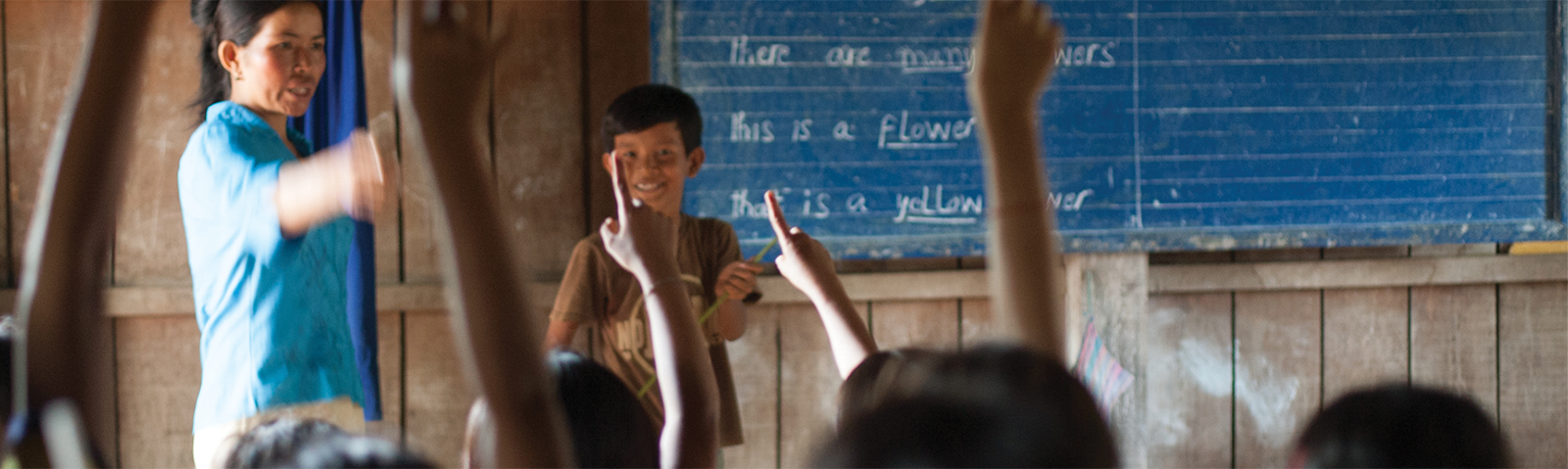
Working at the community level, Baha’is around the world are striving to build capacity on larger and larger scales, enabling people everywhere to become protagonists of development. Central to these efforts is the principle that humanity is but one people. Within such a context, development ceases to be something one group of people does for the benefit of another. Instead, all individuals, whether materially rich or poor, young or old, man or woman, engage in a common enterprise of development. All work shoulder to shoulder to contribute to the well-being of the whole.

Collaboration and partnership

These are concepts that the Baha’i International Community works to share in a variety of international fora. We have long been active in the UN Commission on Social Development and the Commission on Sustainable Development, offering substantive contributions and working to provide platforms for collective exploration of relevant issues.

Among our efforts has been a series of monthly breakfast meetings which strive to address practical challenges and potential solutions in an atmosphere of open and frank dialogue. Since 2012 these gatherings have drawn representatives of Member States, UN officials, and representatives of civil society to discuss aspects of the global development agenda and issues of common concern. We welcome collaboration in areas like these.

Development

What characterizes a flourishing community? How can capacity for social development be released in growing numbers of participants? How can the efforts of individuals, communities, and institutions best be integrated to achieve tangible progress?

English

Pages

Subscribe to Development